Quick Answer
A valid Kentucky will requires you to be at least 18 years old, of sound mind, sign the document in the presence of two credible witnesses, and have those witnesses sign in your presence. Oral or handwritten (holographic) wills face strict limitations under Kentucky law — a typed, properly witnessed document is nearly always the safer choice.
✓ Key Takeaways
- ✓A Kentucky will requires two credible, disinterested witnesses who sign in the testator's presence — this single requirement voids more DIY wills than any other.
- ✓Adding a self-proving notarized affidavit under KRS § 394.225 costs $10–$50 and can prevent costly evidentiary problems at probate years later.
- ✓A will does not avoid probate and does not control assets with beneficiary designations — life insurance and retirement accounts pass outside the will entirely regardless of what it says.
- ✓Kentucky's elective share law gives surviving spouses a statutory right to one-third of real property that no will can override without advance planning.
- ✓The real cost of a defective will isn't the drafting fee you saved — it's the $8,000–$25,000 in probate litigation that surfaces 18 to 36 months after death.
Here's the number that reframes everything: Kentucky's intestacy laws — the rules that govern who gets your assets when you die without a valid will — can redirect property to relatives you'd never have chosen, and the average probate dispute over an invalid will costs a Kentucky estate between $8,000 and $25,000 in attorney fees before it resolves. Writing a will in Kentucky is procedurally straightforward. Getting those procedures wrong is surprisingly easy, and the consequences land entirely on the people you were trying to protect.
Things to know · 9 min read
Kentucky Will Options: Cost, Risk, and Best Use
| Option | Typical Cost | Key Risk | Best For |
|---|---|---|---|
| Online DIY template (e.g., LegalZoom) | $50–$199 | May miss KY-specific formalities; no legal review | Very simple estates with no disputes likely |
| Attorney-drafted simple will | $300–$800 | Low — attorney reviews for KY compliance | Most individuals; straightforward beneficiary structure |
| Attorney-drafted will + trust package | $1,200–$3,500 | Low — full probate avoidance planning | Estates over $100K; blended families; real property |
| Holographic (handwritten) will | $0 | Very high — one typed element voids it | True emergencies only; replace ASAP |
| Will with self-proving affidavit (add-on) | +$10–$50 | Minimal — strongly recommended addition | Anyone executing a will in Kentucky |
1. Misunderstanding Who Can Legally Make a Will in Kentucky
Kentucky law sets the baseline at KRS § 394.020: a testator must be at least 18 years old and of "sound mind" at the time of execution. "Sound mind" is a legal term of art — it doesn't mean perfect memory or sharp cognition. Courts applying this standard look at whether you understood the nature of making a will, the extent of your property, who your natural heirs are, and how the document distributes your estate.
Every time I've reviewed a contested will, the capacity challenge almost always emerges when someone waited too long — when a diagnosis was in the record but execution happened anyway without a physician's contemporaneous note. If there's any cognitive decline in the picture, a capacity letter from a treating physician dated within 30 days of signing is cheap insurance. It costs $0 to $200 and can short-circuit a $15,000 litigation battle.
Quick note: minors can write a will in Kentucky only if they are or have been married. That's the sole statutory exception under KRS § 394.020.
2. The Witness Requirement — Where Most DIY Wills Collapse
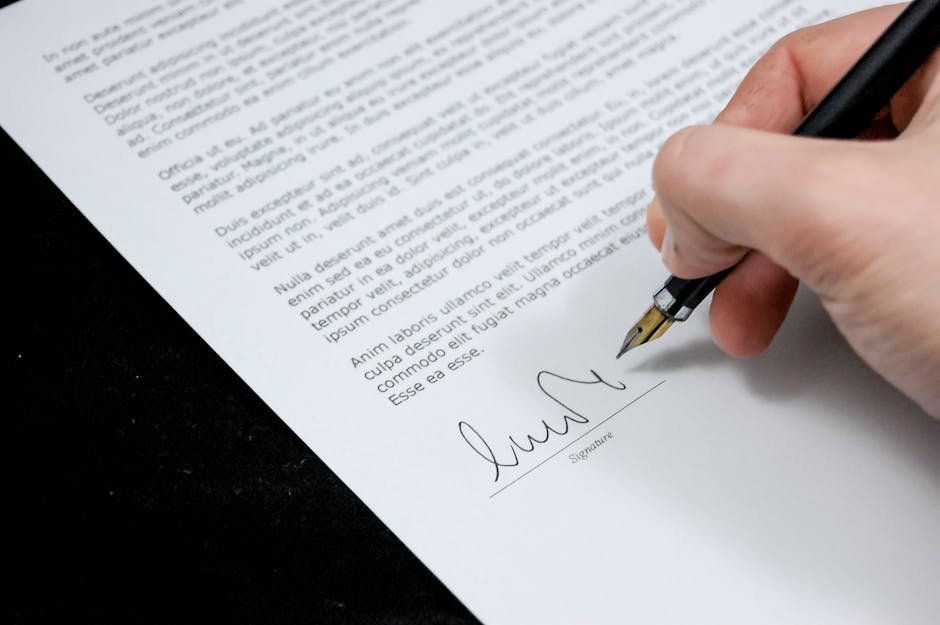
Under KRS § 394.040, a Kentucky will must be signed by the testator in the presence of at least two credible witnesses, who must then sign in the testator's presence. Both conditions matter. Witnesses who sign at a different time, in a different room, or days later produce a facially invalid document regardless of how clearly your intentions are stated.
"Credible witness" isn't just a synonym for "adult." Kentucky courts have interpreted this to mean a witness who won't benefit from the will. A spouse or child named as a beneficiary can technically sign — but it introduces an interested witness problem that some jurisdictions resolve by voiding that beneficiary's bequest. Under Kentucky's current case law, an interested witness doesn't automatically invalidate the will, but it invites challenge. Use neutral witnesses: a neighbor, a coworker, a friend with no stake in the estate.
Clients who come to me after a DIY will goes wrong almost always describe the same scenario: they signed at the kitchen table, then passed the document to a family member to sign later. That's not execution in the testator's presence. It's void.
3. Self-Proving Wills — The $50 Step Most People Skip
Kentucky permits "self-proving" wills under KRS § 394.225. A self-proving will includes a notarized affidavit from the witnesses, signed at the time of execution before a notary public. The practical effect: when the will is offered for probate, the court can admit it without tracking down your witnesses to testify that the signing was valid.
Skipping notarization saves maybe 20 minutes. But if a witness has moved, died, or is simply unreachable when the will enters probate — which often happens years or decades later — the estate faces an expensive evidentiary problem. A notary costs $10 to $50 at most UPS stores, banks, and attorneys' offices. This is the single cheapest risk-mitigation step in the entire process.
Worth knowing: the self-proving affidavit must use substantially the language prescribed by the statute. A general notary acknowledgment on the will itself doesn't satisfy KRS § 394.225. The form matters.
4. Holographic Wills: Kentucky's Strict Handwritten Will Rules
Some states recognize holographic (entirely handwritten, unwitnessed) wills without much friction. Kentucky does too — but under KRS § 394.040(2), a holographic will must be entirely in the testator's handwriting and signed by the testator. One typed line, one printed template with handwritten fill-ins, one date stamped by a computer — and it fails the holographic standard.
Here's the real trap: if a holographic will also fails the formal witness requirement (because it has no witnesses), you're left with a document that courts can only accept under the narrow holographic exception. Courts have voided wills where a single sentence was typed. The margin for error is zero.
Honestly, holographic wills are a last resort. Use them only in genuine emergencies — a terminal hospital stay where no witnesses are available — and replace the document with a formally executed will as soon as possible. The cost difference between a holographic will and a properly witnessed typed will is zero. The risk difference is enormous.
5. Elective Share Rights — What You Cannot Give Away
Kentucky is not a community property state, but it does protect surviving spouses through an elective share right codified at KRS § 392.080. A surviving spouse can elect to take one-third of the decedent's real property outright and one-half of the personal property after debts, regardless of what the will says.
This trips up a lot of people who want to leave everything to children from a prior relationship or to a charity. You can structure a will that attempts to do exactly that — but your surviving spouse has the legal right to override it within six months of the will's admission to probate (KRS § 392.090).
Option A vs. Option B: A will that ignores this right might distribute an estate exactly as written — if the surviving spouse doesn't elect. But if the marriage is strained or the surviving spouse gets independent legal advice, the elective share claim can redirect $50,000 to $500,000+ in a midsize Kentucky estate. Advance planning with a qualified domestic relations order, trust structure, or prenuptial agreement is the only reliable solution. That's a conversation you have with an estate planning attorney, not a document you solve on your own.
6. The Hidden Costs No One Mentions Upfront
Attorney fees for a simple Kentucky will typically run $300 to $800 for a single person and $500 to $1,200 for a couple with mirror wills. Online will services advertise $50 to $199. That gap looks like savings. Here's what actually fills it.
A will that misses a Kentucky-specific formality — wrong witness language, missing self-proving affidavit, improper execution — doesn't fail immediately. It fails at probate, sometimes 18 to 36 months after death, when legal fees to contest or remediate the defect can easily exceed $10,000. The $150 you saved on document preparation can cost your estate 50 times that amount.
Beyond drafting, factor in: notary fees ($10–$50), safe storage (a fireproof home safe runs $60–$200; a bank safe deposit box is $30–$100/year in Kentucky), and will updates after major life events. The Consumer Financial Protection Bureau consistently notes that estate documents left unrevised after divorce, remarriage, or asset acquisition frequently produce outcomes directly contrary to the testator's intent.
Real cost model: A properly drafted, self-proved, attorney-reviewed Kentucky will costs $400–$800 once. Fixing an invalid will at probate costs $8,000–$25,000 minimum. The break-even math isn't close.
7. Revocation Rules — How to Kill an Old Will Correctly
Under KRS § 394.080, a Kentucky will can be revoked by a subsequent will that expressly revokes the earlier one, by a writing declaring revocation executed with the same formalities as a will, or by physical act — burning, tearing, canceling, obliterating, or destroying the document with intent to revoke.
The physical destruction method sounds simple. It isn't. "Intent" is the operative word. A will that's accidentally destroyed isn't revoked. A will destroyed by someone other than the testator, without authorization, may not be revoked. And if you destroy the original but a photocopy survives, Kentucky courts have admitted photocopy evidence in probate while creating expensive factual disputes about whether proper revocation occurred.
One thing I've learned tracking revocation disputes: the safest revocation method is a new, formally executed will with an explicit clause reading "I hereby revoke all prior wills and codicils." That's one sentence. It costs nothing to add. It eliminates the ambiguity that generates litigation.
Marriage does not automatically revoke a prior will in Kentucky — unlike some other states. Divorce does revoke certain provisions affecting a former spouse under KRS § 394.092, but the rest of the will remains valid. Update after any major life change. Don't assume the law does it for you.
8. Probate in Kentucky — Timeline and What the Will Actually Triggers
A will doesn't distribute assets. It grants authority to an executor (called a "personal representative" under Kentucky law) to administer the estate through the district court in the county where the decedent resided at death, per KRS § 395.010. The will is the roadmap. Probate is the journey — and it takes time.
Simple Kentucky estates with a valid will typically close in 6 to 12 months. Contested estates or those with real property, tax obligations, or out-of-state assets can run 2 to 4 years. Kentucky's small estate affidavit procedure (KRS § 395.455) allows estates under $30,000 to bypass full probate — useful for modest estates, irrelevant for most middle-class Kentuckians whose real estate alone exceeds that threshold.
Assets with named beneficiaries — life insurance, 401(k)s, IRAs, jointly held real property with right of survivorship — pass outside the will entirely. A will that says "I leave my IRA to my daughter" is legally ineffective if the IRA beneficiary designation names someone else. The designation wins. Every time. The IRS consistently treats retirement account beneficiary designations as controlling documents independent of any testamentary instrument.
9. The One Question to Ask Any Kentucky Estate Attorney
Before you hire anyone to draft or review a Kentucky will, ask this: "If this will is challenged at probate, what's the most likely point of attack, and how does this document defend against it?"
A good estate attorney will give you a specific answer tied to your circumstances — capacity, undue influence exposure, blended family complications, beneficiary designation misalignment, or real property title issues. A bad one will give you a reassuring generality. The answer tells you more about the attorney than any credential does.
This isn't theoretical. In Kentucky, will contests are filed most frequently on three grounds: lack of testamentary capacity, undue influence, and improper execution. An attorney who hasn't thought about which of those applies to your specific situation hasn't done the job.
The disclaimer that belongs at the top of any article like this one, stated plainly: This is general information, not legal advice. Kentucky estate law involves statutes, case law, and local probate court practices that interact in ways no general article can fully capture. For a document as consequential as a will, professional review isn't optional — it's the minimum.
After execution, make a one-page "will location memo" listing where the original is stored, the names of your witnesses, and your executor's contact information — then give copies to your executor and your estate attorney. Most Kentucky probate delays I've seen stem not from legal disputes but from families who simply can't locate the original document.
Frequently Asked Questions
Does a Kentucky will have to be notarized to be valid?
No — notarization is not required for a Kentucky will to be legally valid. But notarizing it as a "self-proving" will under KRS § 394.225 makes probate significantly smoother by eliminating the need to locate witnesses years later. Skip notarization and you're not invalid; you're just creating a future problem.
Why do will preparation costs vary so much — from $50 online to $1,500 at an attorney's office?
The $50 product is a template that can't account for Kentucky-specific formalities, your family structure, or your asset mix. The $1,500 engagement includes legal analysis of what could go wrong in your specific situation and how to prevent it. That depends on estate complexity, blended families, business ownership, and how much litigation risk you're willing to carry in exchange for upfront savings.
Is a handwritten will valid in Kentucky?
Yes, under strict conditions. A holographic will in Kentucky must be entirely in the testator's handwriting and signed — not a single typed element. If it meets that standard, no witnesses are required. If it doesn't meet that standard and also lacks two witnesses, it's invalid. The margin for error is zero, which is why holographic wills should be a last resort.
Can I disinherit my spouse in a Kentucky will?
Not completely. Kentucky's elective share law (KRS § 392.080) gives a surviving spouse the right to claim one-third of the decedent's real property and one-half of personal property after debts, regardless of the will's terms. You can attempt to limit a spouse's inheritance, but they retain the legal right to override it within six months of probate.
What happens to a Kentucky will after divorce?
Under KRS § 394.092, divorce automatically revokes any bequest or appointment in favor of the former spouse in a prior will — but only the provisions affecting that person, not the entire will. The rest of the document remains valid. You should still execute a new will after divorce rather than relying on the statute to clean up the old one.
Does a will avoid probate in Kentucky?
No — a will actually triggers probate by designating a personal representative and providing instructions for the district court to follow. Assets that pass outside the will (beneficiary designations on IRAs, life insurance, jointly titled property) do avoid probate. A revocable living trust is the primary tool for avoiding probate entirely in Kentucky.
The Bottom Line
The honest tradeoff in Kentucky will planning is this: spend the money on execution, and you can often save it on complexity. A clean, formally executed, self-proved will drafted by an attorney who understands your specific family situation costs $400–$800 and resolves most risk. What you cannot safely cut is the professional review step — not because attorneys are indispensable for every task, but because the intersection of Kentucky statute, local probate court practice, and your particular asset structure produces combination effects that templates miss. Where you can save: a simple estate with straightforward beneficiaries doesn't need a trust. Where you cannot: the witness execution, the self-proving notarization, the beneficiary designation audit. Those are non-negotiable. The people most likely to read an article like this are the ones whose estates are complicated enough to need real help — and that's precisely the group that gets hurt worst by the DIY approach.
Sources & References
- Estate documents left unrevised after divorce, remarriage, or asset acquisition frequently produce outcomes contrary to the testator's intent — Consumer Financial Protection Bureau
- The IRS treats retirement account beneficiary designations as controlling documents independent of any testamentary instrument — Internal Revenue Service

Written by
Mark StevensLegal Research Analyst
Mark is a legal research analyst with 12 years of experience compiling case law data and tracking legislative changes across jurisdictions. He writes to make legal information searchable and actionable for non-lawyers.
See all articles →