Quick Answer
Wrongful termination settlements in the US range from $5,000 to over $300,000. Most firings are technically legal under at-will employment — but a meaningful category of unlawful employment termination rights protects workers from discriminatory, retaliatory, or contract-based dismissals.
✓ Key Takeaways
- ✓At-will employment is the default in 49 states — most firings are legal, but statutory exceptions cover discrimination, retaliation, contract breach, and public policy violations
- ✓The EEOC filing deadline (180 or 300 days depending on state) is jurisdictional — missing it bars federal court access entirely
- ✓California, New York, and New Jersey provide significantly broader protections than federal minimums; the same claim can be worth 3–5x more in employee-protective states
- ✓Never sign a severance agreement without attorney review — broad releases can waive discrimination claims worth multiples of the severance amount
- ✓Litigation economics matter: claims below roughly $25,000 in expected damages often aren't financially viable to pursue after contingency fees
Most people who get fired believe they were treated unfairly. A much smaller number were actually fired illegally. The gap between those two things is where most wrongful termination claims fail — and where understanding your actual rights, not your intuitive sense of fairness, makes all the difference.
Editorial — Expert Opinion
Wrongful Termination Claim Types: Legal Basis, Timelines, and Typical Value
| Claim Type | Legal Basis | Filing Deadline | Typical Settlement Range |
|---|---|---|---|
| Discrimination (Race/Sex/Age/Disability) | Title VII, ADA, ADEA (federal) | 180–300 days (EEOC) | $40,000–$150,000 |
| Retaliation (Whistleblower/FMLA/OSHA) | Various federal statutes | 180–300 days / 2–3 yrs (state) | $50,000–$200,000+ |
| Breach of Employment Contract | State contract law | 2–4 years (state SOL) | $20,000–$100,000 |
| Public Policy Violation | State tort law | 1–3 years (state SOL) | $15,000–$80,000 |
| State Law Discrimination (CA FEHA / NY SHRL) | State civil rights statute | 3 years (CA/NY) | $60,000–$300,000+ |
| Montana Good Cause (At-Will Exception) | Mont. Code Ann. § 39-2-901 | 1 year from termination | $10,000–$75,000 |
The Number That Should Change How You Read This Article
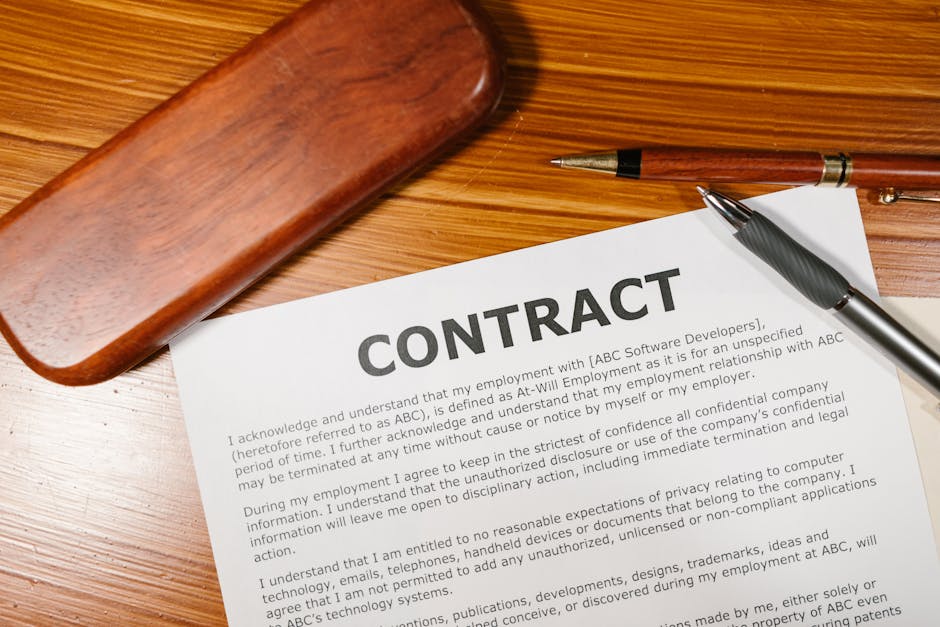
Here's the reframe most employment articles skip: the United States is an at-will employment country. That means, in 49 states (Montana is the sole exception under the Montana Wrongful Discharge from Employment Act, Mont. Code Ann. § 39-2-901), your employer can fire you for any reason, no reason, or a reason that feels completely arbitrary — and that's entirely legal.
That's not cynicism. That's the baseline.
But here's what surprises people who come to me after a termination: the exceptions to at-will are broader and more financially significant than most workers realize. Statutory protections under Title VII of the Civil Rights Act of 1964, the Americans with Disabilities Act (ADA), the Age Discrimination in Employment Act (ADEA), and dozens of state-level equivalents carve out a meaningful zone of protection. Getting terminated inside that zone isn't just unfair — it's a federal or state civil claim that can yield real money.
Every time I've seen a legitimate unlawful employment termination case collapse, it wasn't because the employer was clearly in the wrong. It was because the worker waited too long to file, gathered no contemporaneous documentation, and didn't understand the difference between being treated badly and being terminated illegally. Those are very different things with very different legal consequences.
What Actually Makes a Termination Unlawful
There are four main legal theories under which a firing becomes a wrongful termination claim. Getting them straight matters, because each one requires different evidence, has different filing deadlines, and lands in different courts.
1. Discrimination-based termination. Firing someone because of a protected characteristic — race, sex, national origin, religion, color (Title VII), age over 40 (ADEA), disability (ADA), pregnancy (Pregnancy Discrimination Act) — is unlawful. Worth noting: you don't need a smoking-gun statement from a manager. Circumstantial evidence — disparate treatment compared to similarly situated employees outside your protected class, suspicious timing, shifting explanations from the employer — can establish a prima facie case under the framework set out in McDonnell Douglas Corp. v. Green, 411 U.S. 792 (1973).
2. Retaliation. This is the category most workers underestimate. Federal law prohibits firing an employee for engaging in protected activity: reporting harassment, filing an EEOC complaint, participating in a workplace investigation, requesting FMLA leave, or blowing the whistle on regulatory violations. The Sarbanes-Oxley Act (18 U.S.C. § 1514A) and the False Claims Act (31 U.S.C. § 3730) create particularly strong retaliation protections in regulated industries. Retaliation claims are actually the most frequently filed charge type at the EEOC, which tells you something about how often employers cross this line.
3. Breach of contract. If you have a written employment contract, an employee handbook with termination procedures, or even a documented verbal promise of job security, termination that violates those terms may give rise to a breach claim — even in at-will states. Courts in California, New York, and Illinois have enforced implied contract claims based on handbook language. Employers who draft handbooks with progressive discipline policies need to follow them, or they hand plaintiffs a clean breach argument.
4. Violation of public policy. Most states recognize this tort: you can't legally fire someone for exercising a legally protected right — serving on jury duty, filing a workers' comp claim, reporting OSHA violations, or refusing to do something illegal. The specific contours vary significantly by state.
- Discrimination based on Title VII, ADA, ADEA, or PDA protected characteristics
- Retaliation for EEOC complaints, FMLA requests, or whistleblower activity
- Breach of written employment contract or implied contract from handbook language
- Violation of public policy (jury duty, workers' comp claims, OSHA reporting)
The Costs Nobody Tells You About Upfront
Wrongful termination litigation is expensive — and the cost structure is almost never explained clearly before a worker commits to pursuing a claim.
Most employment attorneys take these cases on contingency, typically 33–40% of the recovery. On a $60,000 settlement, that's $20,000–$24,000 off the top before taxes. Federal and state income taxes on compensatory damages (particularly back pay) are owed in the year of receipt. A $60,000 settlement can net significantly less than $35,000 after fees and taxes — which changes the calculus considerably for smaller claims.
Option A vs. Option B is the honest framework here:
Option A: File an EEOC charge first, pursue administrative remedies. Cost to you: minimal filing fees, your time. Timeline: 6–12 months to receive a right-to-sue letter. The EEOC resolves a small percentage of claims itself — median relief in successful EEOC conciliations is lower than jury verdicts, but the process is free. Downside: you're bound by a strict 180-day filing deadline (extended to 300 days in states with a Fair Employment Practices Agency, which covers most major states). Miss it and you're barred from federal court.
Option B: File directly in state court under state law. State statutes like California's FEHA (Gov. Code § 12940), New York's NYSHRL, or New Jersey's LAD often provide broader protections and longer statutes of limitations — typically 2–3 years. State courts also allow for more generous emotional distress damages in some jurisdictions. Downside: litigation costs are higher, timelines run 18–36 months to trial, and you're facing defense counsel that large employers keep on retainer.
The break-even point for pursuing litigation — accounting for attorney fees, discovery costs, and time — generally sits around $25,000 in expected damages. Below that threshold, many legitimate claims aren't economically worth pursuing. That's a hard truth nobody in this space advertises.
State-by-State: Where Your Rights Are Strongest
The federal floor is just that — a floor. State law frequently adds significant protections, and the gap between states is wider than most workers realize.
California is arguably the most employee-protective jurisdiction in the country. The California Fair Employment and Housing Act covers employers with 5 or more employees (vs. Title VII's 15-employee threshold), permits unlimited compensatory damages, and allows recovery for emotional distress without a physical injury. PAGA (Private Attorneys General Act, Lab. Code § 2698) lets employees sue on behalf of the state for labor violations and recover 25% of civil penalties. California also has a 3-year statute of limitations for FEHA claims since 2020 (AB 9).
New York extended the NYSHRL in 2019 to cover all employers regardless of size and lowered the plaintiff's burden to show harassment was more than "petty slights." The statute of limitations for NYSHRL claims is 3 years.
Texas, Florida, and Georgia, by contrast, largely follow federal minimums. Texas has no state-equivalent of Title VII that goes beyond federal protections for small employers. Florida's Florida Civil Rights Act mirrors federal standards closely. In these states, your primary avenue is typically the federal EEOC route.
Honestly, jurisdiction is the single biggest variable in wrongful termination value. The same fact pattern that yields a $200,000 recovery in California might generate $40,000 in Georgia. Anyone who tells you otherwise isn't accounting for the data.
Quick note: Montana's unique status deserves mention here. Under the Montana Wrongful Discharge from Employment Act, employees who have completed a probationary period (typically 6 months) can only be discharged for "good cause." Montana effectively abolished pure at-will employment — the only state to do so. Cornell's Legal Information Institute maintains a solid overview of state employment statutes for anyone cross-referencing their jurisdiction.
- California: FEHA covers 5+ employees, 3-year SOL, unlimited compensatory damages, PAGA enforcement
- New York: NYSHRL covers all employers regardless of size, 3-year SOL, lowered harassment threshold (2019)
- New Jersey: NJLAD provides broad protections, punitive damages available, covers small employers
- Montana: Only state with 'good cause' requirement after probationary period — at-will abolished
- Texas/Florida/Georgia: Primarily federal floor protections; limited state expansion
Practical Next Steps if You Think You Were Wrongfully Terminated
Move quickly. The most common mistake I see — and it's avoidable — is waiting weeks or months to document what happened, by which point memories fade, emails are deleted, and colleagues who witnessed key events move on.
Within 48 hours of termination: Write a detailed, timestamped account of everything relevant — what you were told, who said it, who witnessed it, and what the stated reason for termination was. Save any emails, texts, performance reviews, or handbook documents you can access from personal devices. You generally cannot access employer systems after termination without authorization.
Preserve your EEOC deadline. If you believe federal discrimination law applies, you have 180 days (or 300 days in FEHA states) from the discriminatory act to file with the EEOC. This deadline is jurisdictional — courts have strictly enforced it. Filing a charge is free and preserves your right to sue later; it doesn't obligate you to litigate.
Consult an employment attorney. Most offer free initial consultations. Bring documentation. The consultation should tell you whether your claim has merit, which theory is strongest, and whether the expected value makes litigation economically sensible. If an attorney is vague about case value in an initial consultation, that's a red flag.
One more thing: do not sign a severance agreement without review. Many agreements include broad releases of all claims — including discrimination claims — in exchange for severance. Under the Older Workers Benefit Protection Act (29 U.S.C. § 626(f)), employees over 40 must receive at least 21 days to consider and 7 days to revoke such agreements. Signing without understanding what you're releasing can forfeit a claim worth multiples of the severance offered.
- Document everything within 48 hours — write timestamped notes covering what was said and by whom
- Secure copies of emails, performance reviews, and handbook from personal devices only
- File an EEOC charge within 180/300 days if federal discrimination law applies
- Do not sign a severance agreement without attorney review — releases may waive all claims
- Consult an employment attorney — most offer free initial consultations with contingency fee structures
- Check your state's specific statute of limitations — state claims often run 2–3 years
The Honest Tradeoff Nobody Will Say Out Loud
Most wrongful termination claims settle. Very few go to trial. The median jury verdict for employment discrimination in federal court is roughly $200,000 — but the median settlement is closer to $40,000–$75,000, and that's before attorney fees. The expected value calculation is sobering.
Where should you spend the money and effort? Strong documentation, prompt action, and a well-chosen attorney are the three variables that actually move outcomes. The quality of your attorney matters more than the strength of your facts in the early stages — because framing the claim correctly at the EEOC charge level shapes everything downstream.
Where can you safely save effort? On the emotional energy spent reconstructing whether the firing was "fair." Courts don't adjudicate fairness. They adjudicate legality. Refocusing on the legal theory — not the perceived injustice — is the mental shift that separates claimants who build viable cases from those who burn out before filing.
This article is general legal information only, not legal advice. Employment law varies significantly by state and individual circumstance. Consult a licensed employment attorney in your jurisdiction before making any legal decisions.
Before your first attorney consultation, pull together every performance review you received in the 18 months before termination — especially any positive ones issued close to the date you engaged in protected activity. Favorable reviews immediately preceding termination are some of the most powerful circumstantial evidence of retaliation, and most workers never think to retrieve them until it's too late.
Frequently Asked Questions
Can I be fired for no reason at all?
In 49 states, yes — at-will employment permits termination without cause. The exception is Montana, which requires 'good cause' after a probationary period. However, 'no stated reason' doesn't eliminate a discrimination or retaliation claim if the underlying motive was unlawful.
Why do wrongful termination settlements vary so much?
Jurisdiction is the biggest driver — California and New York permit broader damages than most states. Claim type matters too: retaliation and disability claims often yield higher settlements than contract claims. The strength of documentation and employer size also shift the calculus significantly.
Is a cheaper EEOC route ever better than hiring an attorney immediately?
Sometimes, yes. For smaller claims under $25,000 or in states close to federal minimums, the EEOC administrative process can resolve a claim without litigation costs. The trade-off is lower median outcomes and limited negotiating leverage — but it's free and preserves your right to sue.
What are the hidden deadlines I should be suspicious about?
The 180-day EEOC filing deadline is the most dangerous — courts treat it as a hard cutoff. Severance agreement revocation windows (21 days to consider, 7 days to revoke for workers over 40) are routinely buried in fine print. State statutes of limitations vary from 1 to 3 years and aren't always prominently disclosed by employers.
Does being laid off vs. fired matter legally?
Legally, the label your employer uses doesn't determine the claim. A 'layoff' that disproportionately affects protected-class employees can still constitute disparate impact discrimination under Title VII. The question is whether the selection criteria for the reduction in force had an unlawful basis.
Can I still have a claim if I signed an at-will acknowledgment in my offer letter?
Yes. Signing an at-will acknowledgment waives protection against termination without cause — it does not waive federal or state anti-discrimination protections. Statutory rights under Title VII, ADA, or ADEA cannot be waived in advance by an employment agreement.
The Bottom Line
The legal system doesn't compensate workers for unfair treatment — it compensates them for unlawful treatment. That distinction is not semantic. Building a viable unlawful employment termination claim requires understanding exactly which legal theory applies, acting inside tight filing windows, and making an honest calculation about whether the expected recovery justifies the process. For many workers, especially in strong employee-protective states like California or New York, the answer is yes. For others, particularly in states that track federal minimums and where damages are modest, the math is harder.
The one question to ask any employment attorney in an initial consultation: 'What is the weakest part of my claim, and what would it take for the employer to successfully defend against it?' An attorney who answers that question directly — rather than selling you on the upside — is one worth trusting with your case.
Sources & References
- Retaliation claims are the most frequently filed charge type at the EEOC — U.S. Equal Employment Opportunity Commission
- Cornell Legal Information Institute provides overview of state employment statutes — Cornell Law School Legal Information Institute

Written by
Mark StevensLegal Research Analyst
Mark is a legal research analyst with 12 years of experience compiling case law data and tracking legislative changes across jurisdictions. He writes to make legal information searchable and actionable for non-lawyers.
See all articles →